
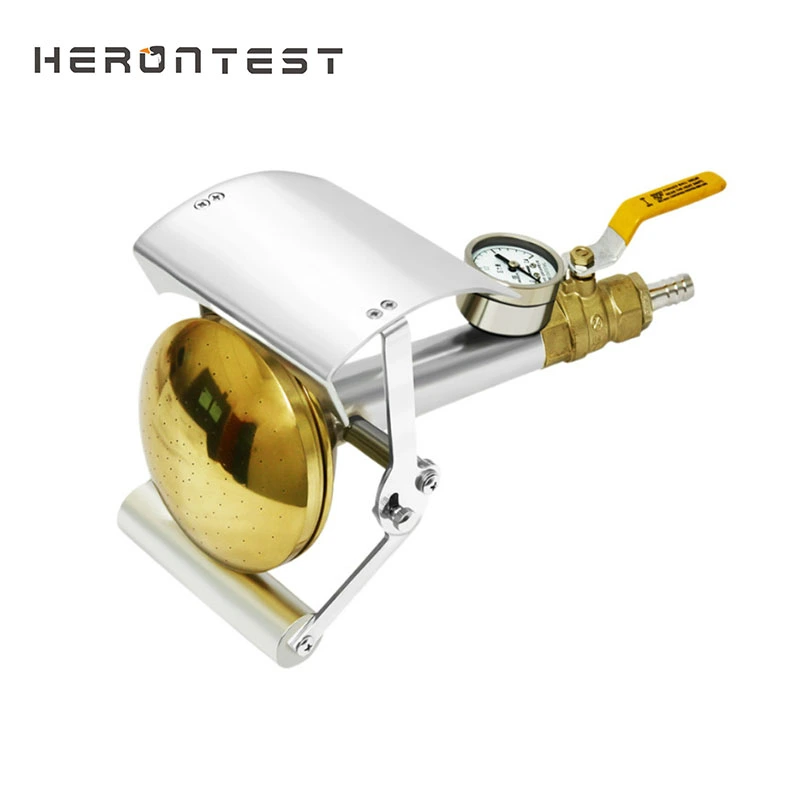
IEC60529 IPX3 IPX4 Handheld Spray Nozzle Waterproof Testing Equipment
Engineered for compliance, this IEC60529 IPX3 IPX4 spray test nozzle provides precise water ingress verification with adjustable pressure for industrial validation.
View productThe HNT-PTKIT set gathers the calibrated probes that IEC 60529, IEC 61032 and UL 61032 call for into one aluminium suitcase, so a lab can move from a 50 mm sphere check on IP1X to a 1.0 mm wire check on IP4X without re-kitting the bench between tests. Engineers shortlisting test probe kits usually need four things at once: the right tip geometry, the correct thrust band, a way to measure applied force, and a case that survives transport. That is why this kit pairs Probe A, the jointed test finger B, the 2.5 mm rod C and the 1.0 mm wire D with an integrated thrust dynamometer and labelled storage. If your test plan covers only one ingress level, the enquiry form on the same page is where you describe the single IEC 60529 test probe kit configuration you want quoted.

HNT-PTKIT: IEC/EN 60529 test probe kit with thrust dynamometer for IP1X, IP2X, IP3X and IP4X probes.
Match the IP level written in your test plan to the probe that carries the defined geometry and thrust band. The values below are the dimensional parameters listed for HNT-PTKIT.
| IP Level | Probe | Tip Geometry | Baffle Plate / Dam-Sphere | Handle | Thrust |
|---|---|---|---|---|---|
| IP1X | Test Sphere Probe A (HNT-PAT) | Sphere, 50 mm diameter | Baffle plate Ø45 mm × 4 mm thick | Ø10 mm × 100 mm | 10–50 N |
| IP2X | Jointed Finger Probe B (HNT-PBT) | Knurled finger Ø12 mm × 80 mm | Baffle plate Ø50 mm, 100 mm length | Ø10 mm class handle with banana jack | 10–50 N |
| IP3X | Test Probe C (HNT-PCT) | Rod Ø2.5 mm × 100 mm length | Dam-sphere Ø35 mm | Ø10 mm × 100 mm | 3 N |
| IP4X | Test Probe D (HNT-PDT) | Wire Ø1.0 mm × 100 mm length | Dam-sphere Ø35 mm | Ø10 mm × 100 mm | 1 N |
HNT-PTKIT is supplied as a complete four-probe set rather than a loose assortment of parts. This is what the product page lists inside the case.
HNT-PTKIT contents: four IEC 60529 probes, thrust dynamometer and outdoor aluminium suitcase.
A test only means something if the force behind the probe matches the code it claims to verify. HNT-PTKIT probes are precision-engineered products calibrated for specific thrust force ranges, with an integrated dynamometer for force measurement.
Bars indicate the relative size of each specified thrust band; they are not a linear force scale.
The kit is designed to provide the probes required by UL / IEC / EN 61032 and the IP Code standard, so one purchase supports the accessibility testing sequence from IP1X through IP4X.
The probe set is used to verify that protective enclosures prevent user access to hazardous parts. Probe A, finger B, rod C and wire D each test a different access path on the same housing.
The same kit addresses solid foreign-object ingress, which is where the 2.5 mm rod and 1.0 mm wire definitions matter most.
The kit is stated to meet requirements for testing standard(s) including but not limited to IEC 61032, with defined dimensional parameters aligned to IEC 61032 and IEC 60529.
Four common situations, each tied to a concrete fact in the kit specification and a decision you can act on.
Early prototypes often change vent slots, seams and connector apertures from one build to the next. You need IP1X sphere and IP2X finger checks on the same day you test the IP3X and IP4X slots.
Line-side checks need a repeatable force and a probe that goes back to the same place after every shift. Loose probes disappear or get mixed up.
Third-party reviewers ask how the access test was performed, with which probe and at what force.
Site visits mean probes travel by vehicle and are handled by people who did not pack them.
Tell the team your IP range, the probes you need covered and the quantity of kits required. They will come back with the latest quote for the IEC/EN 60529 test probe kit configuration that matches your test plan.
Keep adjacent product options together for a faster catalog comparison.
Engineered for compliance, this IEC60529 IPX3 IPX4 spray test nozzle provides precise water ingress verification with adjustable pressure for industrial validation.
View product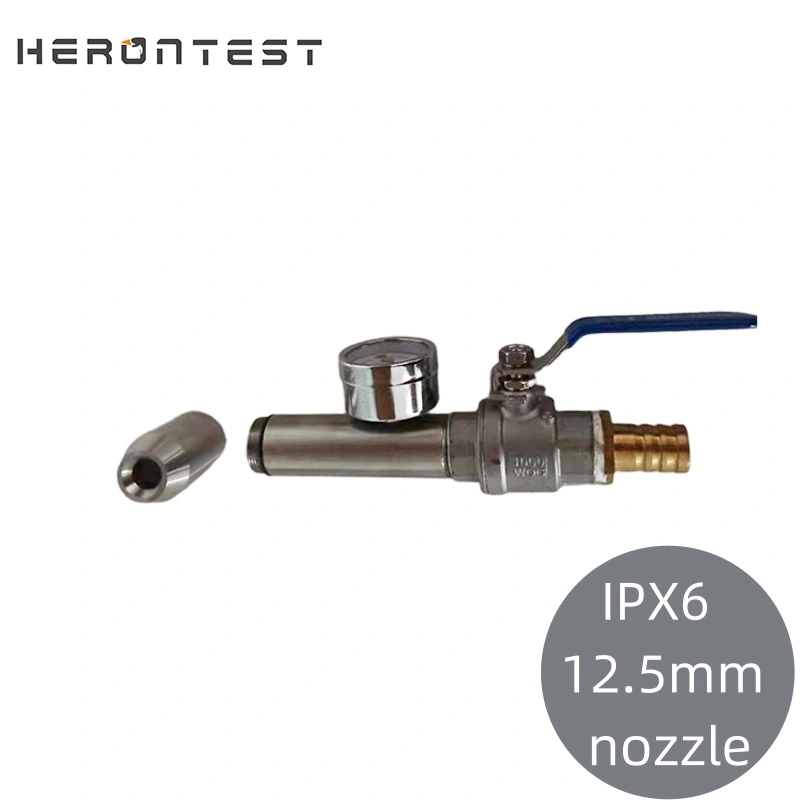
Specification: 1. Diameter of curved finger: 12 mm 2. Bending finger length: 80mm (total length of three sections) 3. Diameter of baffle: 50mm 4. Baffle length: 100mm 5. Reference standard: IEC60065…
View product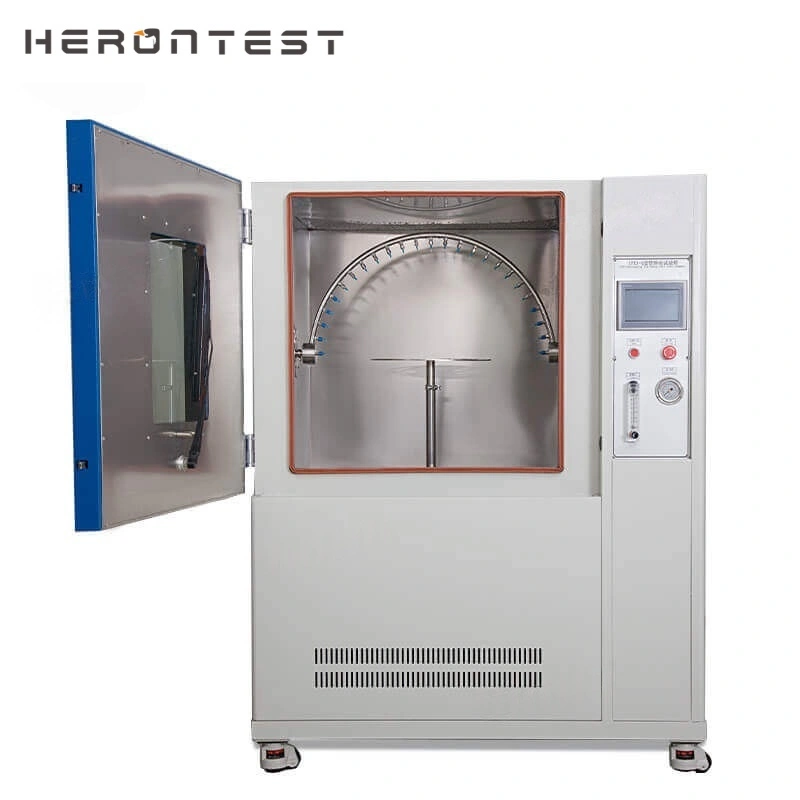
IPX3 IPX4 test chamber is specifically engineered to simulate and evaluate the resistance of your products against water spray and splashes, ensuring their durability and performance in various…
View productthe kit covers ip1x through ip4x. it contains the 50 mm sphere probe a for ip1x, the jointed test finger b for ip2x, the 2.5 mm rod probe c for ip3x and the 1.0 mm wire probe d for ip4x, together with an aluminium suitcase.
the ip1x sphere and the ip2x jointed finger are specified with a 10–50 n thrust. the ip3x 2.5 mm rod is specified at 3 n and the ip4x 1.0 mm wire at 1 n. the integrated thrust dynamometer is provided for force measurement during testing.
the kit contains the hnt-pat test sphere probe with 10–50 n thrust, the hnt-pbt jointed finger probe with 10–50 n thrust and a banana jack in the handle, the hnt-pct 2.5 mm test rod with 3 n thrust, the hnt-pdt 1.0 mm test wire with 1 n thrust, an integrated thrust dynamometer and an aluminium suitcase.
the kit is designed to provide the probes required by ul, iec and en 61032 and the ip code standard, and its defined dimensional parameters align with iec 61032 and iec 60529. it supports accessibility testing from ip1x through ip4x.
the product page presents hnt-ptkit as a complete four-probe kit in an aluminium case. if your test plan covers fewer ingress levels, describe the configuration you need in the request a quote form so the team can confirm what can be supplied.
the product page lists product development, manufacturing quality control and certification testing, where the aim is to prevent user access to hazardous parts or the ingress of foreign objects.
